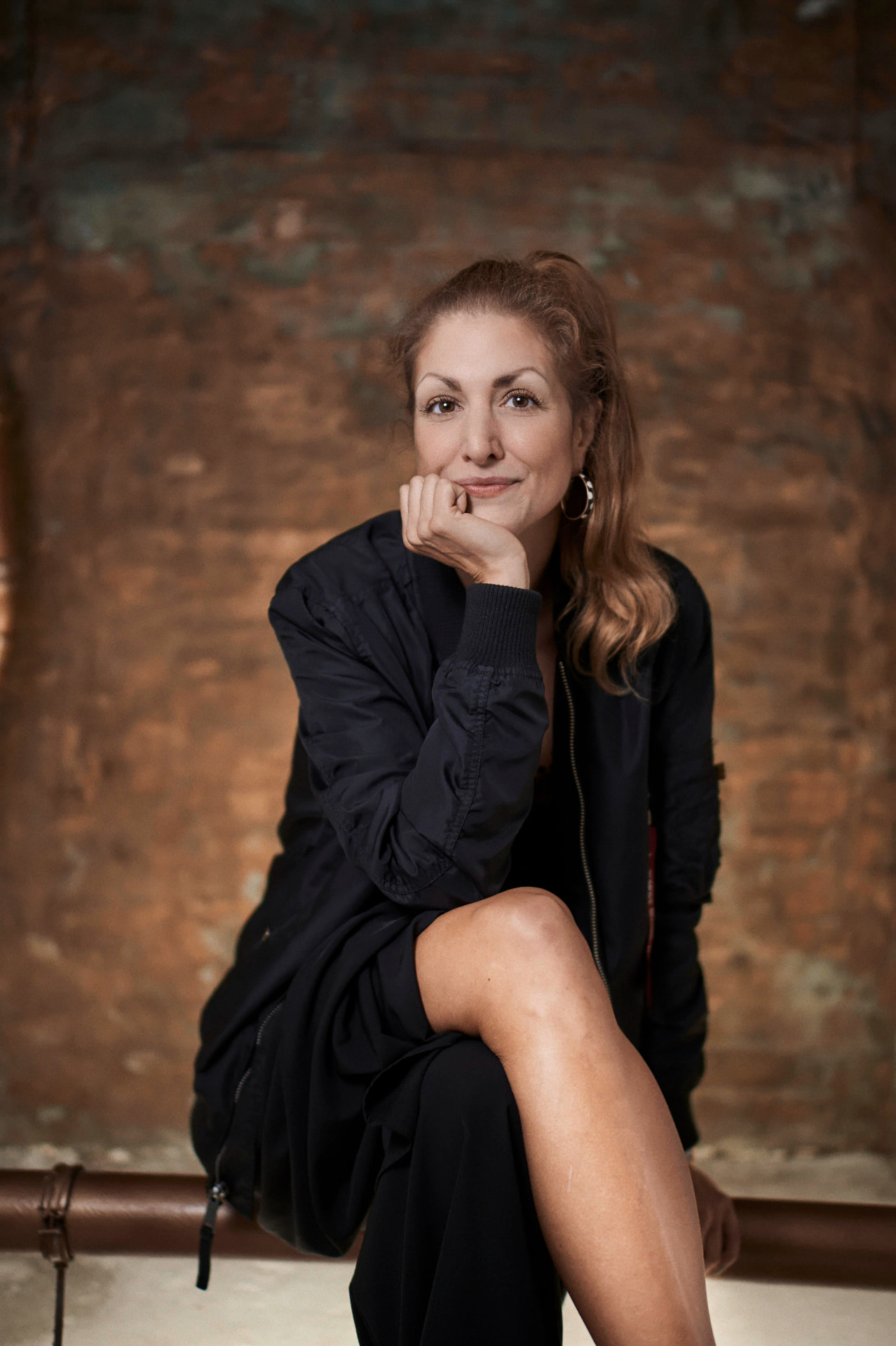
TRAUMA-INFORMED NERVOUS SYSTEM WORK, THERAPY AND COACHING

Thoughts, feelings, perception, love, communication, coping...
they all start with your nervous system.

You may understand your patterns. You may know exactly what needs to change. And still, something keeps pulling you back into familiar thoughts, emotions, relationships or ways of coping. That is rarely a question of motivation.

Julia Rathjen, therapist in interpersonal neurobiology in Berlin

©andreasriedelDotCom

„You're not your symptoms and you don't have to hit rock bottom to get to feel better.“

Julia Rathjen

  • Therapist in interpersonal neurobiology
  • Trauma-informed practice
  • Online & Berlin Mitte
  • English & German
  • Scientifically informed
  • Integrative therapy – coaching – counselling

A different way of understanding change

Your symptoms are not the whole story.

Stress, anxiety, emotional overwhelm, burnout, depression, ADHD, relationship difficulties or recurring inner conflicts rarely exist in isolation. They are often expressions of a nervous system that has adapted intelligently to earlier experiences.

Rather than asking, „What is wrong with you?“, we begin with a different question: „What happened, and how has your nervous system learned to protect you?“ Understanding these patterns opens the door to meaningful and lasting change.

STRESS SYMPTOMS, PERFECTIONISM, PROCRASTINATION, SELF-WORTH, DEPRESSION 

Integrative Therapy & CoachingTrauma-Informed SupportAttachment & Developmental TraumaPsychological Counselling, Berlin Mitte & Online

Where people recognise themselves

What comes closest to your own experience?

This is not about a diagnosis, but about what you actually notice in your days. Tap a card to read on.

01

I get through the day. It just takes more out of me than anyone sees.

From the outside, much of your life looks composed. Inside, each day costs more than you allow yourself to acknowledge.

A nervous system shaped by sustained performance rarely returns to genuine rest on request. Exhaustion of this kind is not a question of willpower. It is a physiological reality.
02

I think everything through, in every possible direction – and then once more.

Thoughts circle. Decisions feel weighted. Real stillness stays out of reach.

Persistent rumination is often the nervous system's attempt to build safety through control. What helps is rarely fighting the thoughts, but allowing safety to be experienced in another way.
03

I react more strongly than I would like to.

Anger, withdrawal or tears can arrive before the mind has caught up. And I often sense that I am either too much or not enough.

Strong reactions are rarely a matter of character. They are patterns of activation. As the pattern, its triggers and the meaning of older emotions become clearer, the response begins to change – not through discipline, but through regulation.
04

I adjust before I have even noticed what I need.

„Others first“ has become second nature. The question of what I actually want stays quietly in the background.

Adapting was often the most intelligent early strategy for belonging. In time it can become a conscious choice rather than an automatic response, and you may begin to sense what you need, what you want, and, importantly, what you do not.
05

I keep finding myself in similar relationships.

Closeness, conflict or expectation quietly activate patterns you thought you had long outgrown.

Relational patterns are learned, and they remain open to change throughout life. A different quality of relationship becomes possible when it can be experienced, not only understood.
06

I feel responsible for holding everything together.

Always there, always reachable, willing to help, ready to carry more than my share. Even at night.

A nervous system in constant responsibility remains in quiet alarm. Recovery asks for more than rest. It asks for physiological, emotional and relational signals of safety – and the space in which they can actually be felt.

Much becomes clearer when we stop looking at thinking, feeling, body, actions, and relationships in isolation, and begin to see them as one intelligent system. Who benefits from this work

Experiences

A few words from people
who took the first step.

Derek Brian Richards

November 2025

Julia is the most educated, intelligent, empathetic, sharp-minded and inspiring therapist and coach I could ever have hoped to find. She is specialized in analytical and therapeutical methods I had never heard of before - and I've been trying to sort myself out for many a year n…
Heather Newkirk

Januar 2026

In my short time of working with Julia , I have been feeling so comfortable and confident in her care and space. She is highly intelligent but also incredibly kind and comforting / I feel like a human being speaking with another human in a partnership for my wellness. She is high…

Anonymous, male, 55

July 2026

Update: I’ve been working with Julia for half year now and it changed my life, still is changing my life. When I got to understand my nervous system and learned that my functioning, my performance, my success are ways of protecting myself and creating control, I could finally let…

Daniel San

Dezember 2025

Hab so viel ausprobiert und gedacht, manche Sachen werden nie wieder besser. Körperlich tat halt viel weh, war halt so. Gedanklich eigentlich nur im Karussell. Beziehungen: Drama. Aufschieberitis hoch zehn und allein zuhause mein härtester Feind. Ewig alte Muster und immer wieder…

Alexander de Baptistis

November 2025

Julia begleitet auf eine außergewöhnlich präsente und respektvolle Weise. Ihr Ansatz zeichnet sich dadurch aus, dass sie eine sichere, urteilsfreie Atmosphäre schafft. Geprägt von Klarheit, menschlicher Wärme und hoher professioneller Kompetenz. In ihrem Feld ist sie nicht nur f…

WaLis (anonym, weiblich, 32)

Februar 2026

Ich kann Julia und ihre Arbeit nur empfehlen! Mir ging es bereits nach zwei Sitzungen deutlich besser. Schlaf und körperliche Symptome haben sich bereits jetzt stark verbessert. Sie hat mir eine klare Linie gesetzte bzw. mich auf (meinen!) richtigen Weg geleitet, wie ich endlich…

Franziska Schulz

Mai 2026

Über mehrere on- und offline sessions hat julia mich begleitet. dabei ist sie unglaublich dynamisch, einfühlsam und erfasst schnell & präzise zusammenhänge und schlüsselelemente. ihr umfangreiches wissen zu den vorgängen im Körper, im Nervensystem, ist beeindruckend. Ihre praktis…

Juliane Böldicke

Dezember 2025

Herzensempfehlung! Die Arbeit mit Julia gehört zu den wertvollsten Erfahrungen meines Lebens. Bei ihr habe ich einen Raum gefunden, in dem ich mich wirklich gesehen fühle - in meiner Tiefe, meinen Fragen, meinen alten Mustern und auch in meiner Rolle als Mama. Sie hilft mir, di…

anonym, männlich, 52

Oktober 2025

Julia Rathjen hilft. Umfassend und tiefgehend. Kennt ihr das? Diese wiederkehrenden Muster. Dieses Ahnen und doch nicht erkennen. Sich bemühen und dennoch verzweifeln. Gute Vorsätze und gleichzeitig verharren in bekannten Bahnen? Ich schon. Und das schon ziemlich lange. So lang…

anonym, männlich, 56

September 2025

In so kurzer Zeit so viel geschafft, wow! Frau Rathjen arbeitet ganzheitlich mit Humor und wissenschaftlicher Expertise und gibt einem für die Zeit zwischen den Sitzungen Alltagstransfers und direkt anwendbare Tools für alle möglichen Bereiche ohne einen mit Hausaufgaben zu über…

If you recognise something of yourself in these voices, we can look together, in a free initial conversation, at whether my way of working fits what has brought you here.

Book an initial consultation

Approach

It's not just about symptoms.
It's a holistic perspective on the human condition.

When the nervous system feels safe, lasting change becomes possible across body, emotion and relationships. Before that, it rarely does.

Understanding what your body has learned to protect.

Symptoms are not mistakes. They are the most intelligent solution your system has found so far.

Resonance rather than correction.

Safety arises through relationship, not through instruction. This holds within therapy, and beyond it.

Lasting integration.

Not a tool, not a method. A gradual reorganisation of perception, emotion and behaviour (thinking, too, is a behaviour).

More about my approach

Centre

Nervous system

Understanding is often the first step. What this path might look like for you is something we can explore together in a first conversation.

Book an initial consultation

WHERE PEOPLE RECOGNISE THEMSELVES

What feels most familiar?

This isn't about finding a diagnosis. It's about recognising patterns that quietly shape everyday life. Choose the card that feels closest to your experience.

01

I get through the day. It just takes more out of me than anyone sees.

People often describe me as calm, capable or organised. They rarely notice how much effort it takes to keep everything going. Living like this for long enough can become normal. The body keeps adapting, even when it has been asking for recovery for quite some time.
02

My mind doesn't switch off easily.

I replay conversations, think through every possibility and struggle to leave decisions behind. Trying to think your way to certainty often begins as a way of staying safe. Understanding that changes the question from "Why can't I stop?" to "What am I trying to protect?"
03

Sometimes my reactions feel bigger than the moment itself.

I can become irritated, anxious or overwhelmed before I've even understood what's happening. Strong reactions are rarely random. They usually make more sense once you see the experiences your nervous system has learned to expect.
04

I notice what everyone else needs before I notice myself.

Helping comes naturally. Knowing where my own limits are often doesn't. Looking after others may once have been the safest thing to do. Over time, it can become so familiar that your own needs fade quietly into the background.
05

The people change. The pattern somehow stays the same.

Different relationships seem to lead to similar feelings, even when I hoped this time would be different. Our expectations of closeness are shaped through experience. The encouraging part is that they can also change through experience.
06

I carry more than most people realise.

Being responsible has become second nature. Rest often feels less familiar than keeping everything together. When responsibility has been your default for years, slowing down can feel surprisingly uncomfortable. That doesn't mean you're doing it wrong. It usually means your nervous system needs time to recognise that it's safe.

A system, not a chain

Stress, relationships and the body
shape one another.

A thought alters the body's tension. Tension shifts expression and action. Action changes relationships – and relationships, in turn, reshape what we think and feel. There is rarely a single beginning. There is, however, a way out of downward spirals and back to a calmer baseline.

This is why good work does not begin with a symptom, but at the point in the circle where change is actually possible today.

Centre

Nervous system

You may be wondering …

Perhaps you are thinking …

Many people arrive at a first conversation carrying similar thoughts. Not because they are wrong, but because they have only ever heard one side of their own story.

I have already tried so much.

Perhaps it is less about trying more, and more about understanding the conditions under which change becomes possible at all.

But I do function.

Many people function well for a long time. Sometimes it costs far more than they realise. And eventually the body speaks – through infections, chronic complaints, or an outright collapse.

Maybe I just need to pull myself together.

Discipline can carry a great deal. Lasting self-regulation, however, never grows out of more effort. And you may begin to feel better long before anything has to fall apart.

I don't want to spend years revisiting my past.

Not everything from the past needs to be told in detail. What matters most is often the way earlier experiences quietly continue to shape today.

I have few memories, or none. Can this even work?

Absolutely. I myself have only five memories from before the age of ten. What has helped me and many others may not be the same route for you – but there is always a path that can be walked.

Perhaps I am simply making too much of this.

Most people judge themselves far more harshly than the people around them do. Understanding almost always arrives long before self-compassion does.

I am afraid of losing my capacity to perform.

Sustainable change does not mean doing less. It means no longer having to work against yourself in order to keep going.

I do not even know where to begin.

You do not need to. Orientation is something we find together.

Sometimes change does not begin with an answer.
It begins with a different question.

Book an initial consultation

A different way in

Why previous approaches often fall short

Many people who arrive here have already tried a great deal, and still sense that nothing has genuinely shifted. In most cases, this is not their fault.

These themes return again and again in conversation. Further questions & answers

EMPTINESS, IMPULSIVITY, POOR BOUNDARIES, LACK OF MOTIVATION, ADDICTIVE COPING 

Psychotherapy BerlinNervous System RegulationTrauma TherapyNeurodivergence

About Julia

Scientific curiosity.
Human understanding.

My approach has been shaped by years of professional practice, and by my own experience of psychological recovery. Having lived through severe depression, chronic insomnia, emotional dysregulation, trauma-related symptoms and profound grief, I know that healing is rarely linear.

I also know that meaningful change is possible. Today I bring clinical knowledge, applied neuroscience and lived experience together to create a space that is both evidence-informed and deeply human.

More about me
Julia Rathjen

If you sense that my way of working might meet what has brought you here, I would be glad to hear from you.

Book an initial consultation

Before the answers

Common misbeliefs.

Sentences many have heard often, and eventually come to believe. A quiet shift in perspective, before more concrete questions are addressed.

Irrglaube 01

„Du musst nur disziplinierter werden."

Vielleicht bist Du nicht undiszipliniert, sondern schlichtweg erschöpft.

Frequent questions

Answers, before you have to ask.

How it unfolds

What happens after you write.

Four quiet steps. No automation, no obligation.

  1. 01

    Your enquiry

    A short form – only the essentials. You do not have to explain anything that cannot yet be explained.

  2. 02

    A personal reply

    I usually reply personally within two working days – never through an automated process.

  3. 03

    Free initial conversation

    Twenty minutes online. We look together at what is on your mind and whether my way of working fits.

  4. 04

    A decision, together

    You decide, in your own time, whether and how to continue. No sales talk, no pressure.

Free initial consultation

You don't have to have everything figured out before reaching out.

Sometimes one conversation is enough to understand why change has felt so difficult – and where a different path might begin. Twenty minutes, online, free of charge. Without obligation.

Duration
20 minutes
Format
Online
Cost
Free
Purpose
Orientation
Book your initial consultation